

Ciao, and welcome. If you’re reading this, you’ve probably seen the listings: stone houses in Italian hill towns for the price of a used car. I want to tell you what’s real about that and what isn’t, because I’m from here. I was born and raised in Pescara, and in 2008 I bought a house in Penne that was literally falling apart. The day the agent showed it to me, I think he was embarrassed. I bought it anyway, rebuilt it exactly as I had it in my head, and it became my shelter every time I came back from living abroad. So when I write about buying property in Abruzzo, it’s not theory. I’ve also helped foreigners buy here, plan their visits, and find their feet in the region. This is the guide I wish someone had handed them before they started.
In short: Abruzzo is one of Italy’s most affordable regions to buy a house, and unlike the famous regions the prices are real. As of July 2026, around €30,000 buys a village house to restore, €45,000-80,000 buys something habitable in the hills, and the coast costs three to four times the interior. Budget roughly 10-12% on top for taxes, notary and agency. Below: what your money buys, where to look, how the process really works, and the earthquake question answered straight.
What your money actually buys in Abruzzo right now
Forget the dreamy renders you see on some property sites. Here’s what was actually on the market this month. These are real listings I checked on Gate-away and Green-acres, the two portals foreign buyers use most for Abruzzo, as of July 2026. Listings come and go, so treat these as reference points, not offers.
- €29,000: a three-storey semi-detached house of 142 m² with 2,640 m² of land in Serramonacesca, at the gateway of the Majella National Park. Condition: to be restored, and that means everything.
- €45,000: a restored, habitable two-bedroom house with 3,000 m² of garden and woodland in Beffi, a hamlet of Acciano in the Sirente-Velino area.
- €70,000: a habitable country house of 108 m² with over 4,000 m² of land in Castelli, the ceramics town under the Gran Sasso.
- €80,000: a 164 m², three-bedroom, move-in-ready apartment in the historic centre of Guardiagrele, one of the most beautiful hill towns in the region.
- €135,000: a renovated two-bedroom apartment 280 metres from the sea at Vasto Marina.
- €140,000: a top-floor, partially furnished two-bedroom apartment in excellent condition in Sulmona.
- €262,000: a restored 325 m² country house with four bedrooms and a hectare of land in Cellino Attanasio, between the mountains and the Teramo coast.
- €290,000: a 195 m² apartment with huge terraces on the hillside of Roseto degli Abruzzi, ten minutes from the beach.
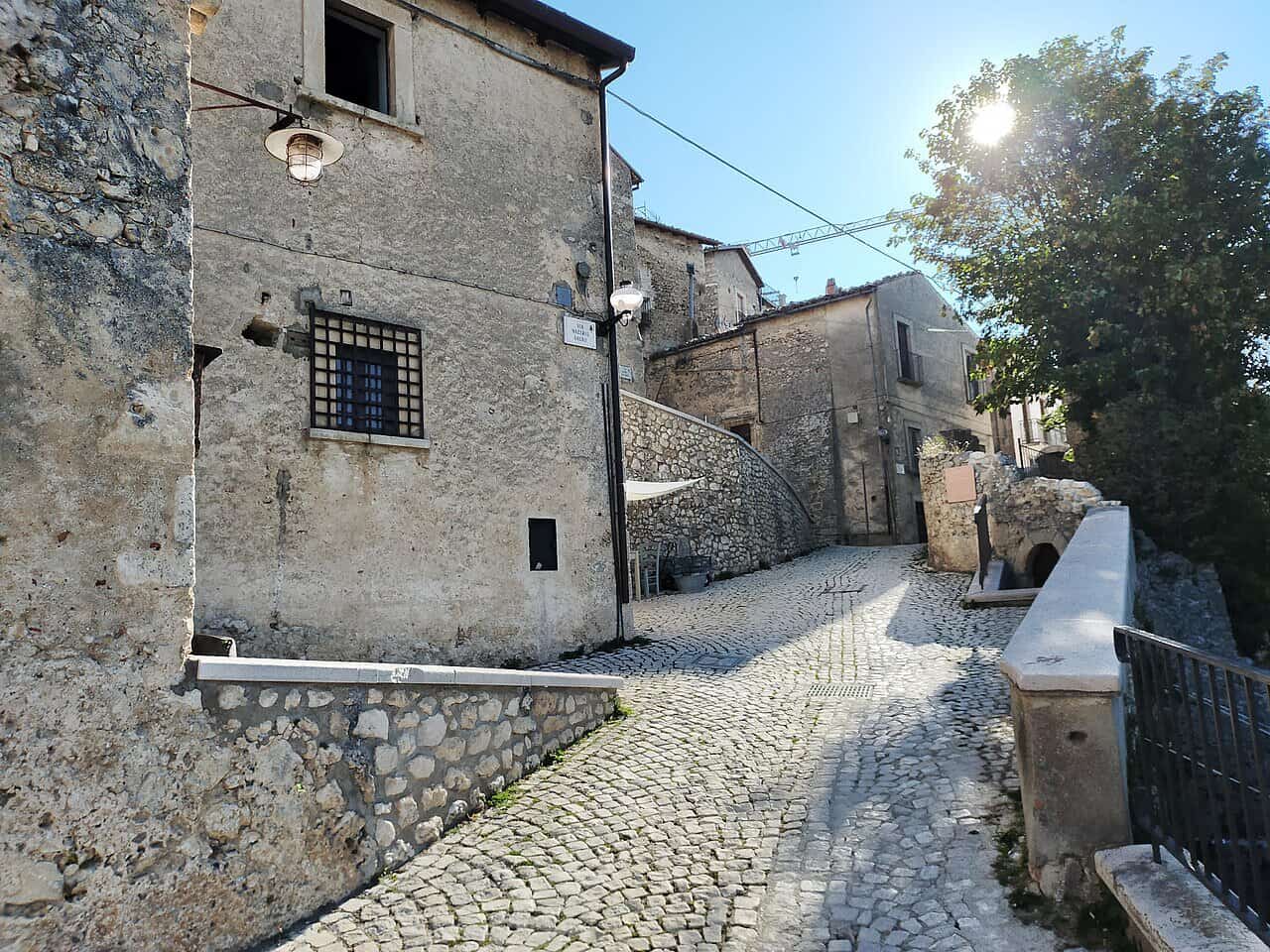
Two patterns you should know about. First, the cheap houses are inland, almost without exception. When I filtered Gate-away in July 2026, there were about 350 listings under €45,000 in Abruzzo, and they were all in hill and mountain villages… Farindola, Schiavi di Abruzzo, Carunchio, Caramanico Terme. On the coast, the same search returned nothing. Second, “habitable” arrives earlier than you’d think: restored village houses show up from €45,000. For market averages, idealista’s data for the second quarter of 2026 puts Abruzzo around €1,191 per square metre, with the coast roughly €1,900 and Pescara city over €2,500. Those are approximate portal averages, but they match what I see in the listings.
Where to buy, honestly: coast, hills or mountains
This is where I stop you before you fall in love with a €25,000 ruin in a village of forty residents. The question isn’t whether the house is beautiful. The question is what the town feels like on a Tuesday in February.
The coast, from Pescara up to Teramo’s beach towns and down to Vasto, lives all year. Pescara is a real city: hospitals, trains, the airport, restaurants open in January. You pay for that. The first line of hills behind the coast, where my Penne sits with towns like Atri, Loreto Aprutino and Città Sant’Angelo, is for me the sweet spot: 30-40 minutes from the sea, real town life, and prices still gentle. The mountain villages are the most beautiful and the cheapest, and they’re also the quietest in winter; some run on ski season, some go very still. None of this makes one choice right and one wrong. It depends whether you want summers only or a life.
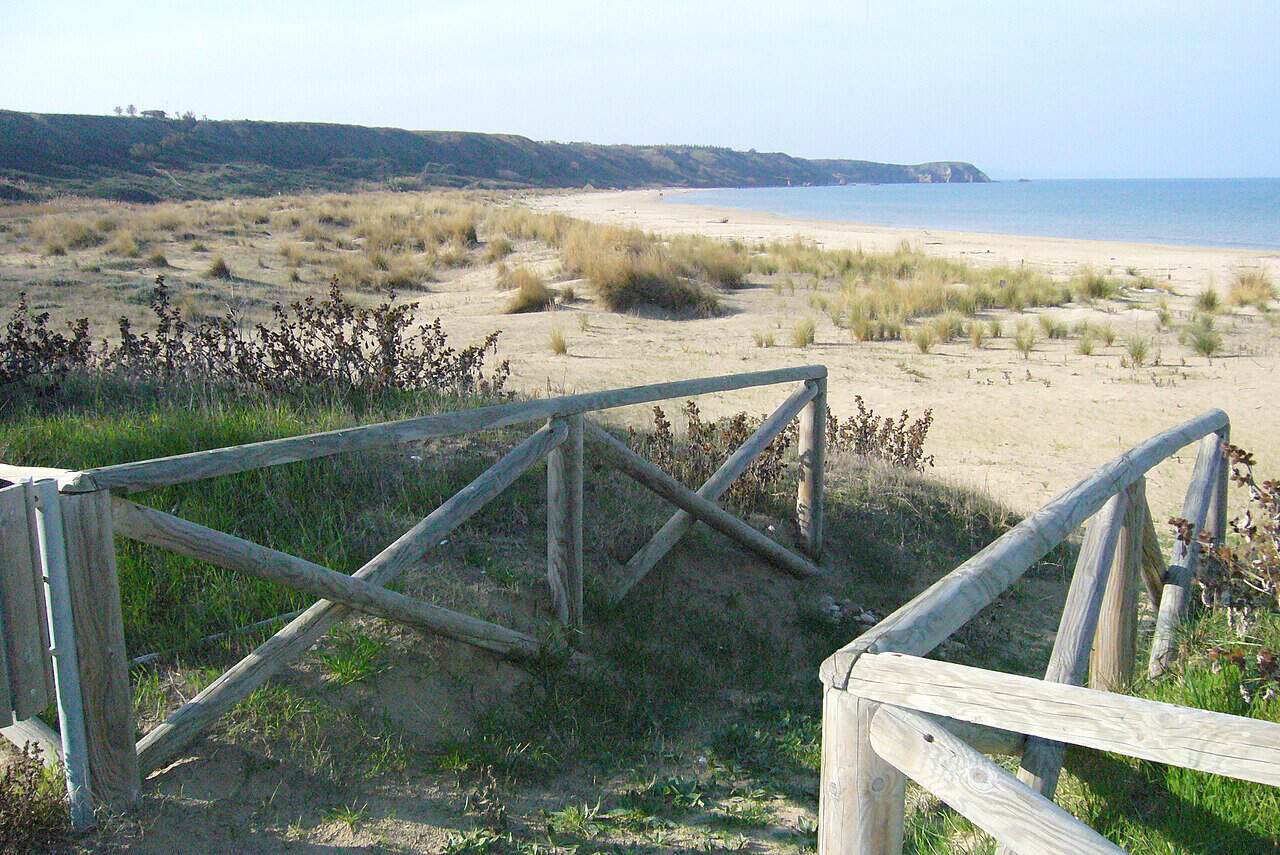
My practical advice: never buy from photos. Come in the off season, rent a car, book a base in Pescara for a few nights, and drive the shortlist. Have a coffee in the piazza, check how far the nearest hospital and supermarket are, and see who’s around. If you can’t come, that’s one of the things I help people with… more on that at the end.
How buying actually works here
The Italian process surprises foreigners, so let me walk you through it the way it really goes.
First thing: you need a codice fiscale, the Italian tax code. It’s free and any Agenzia delle Entrate office issues it. EU citizens can buy with no restrictions. If you’re American, British, Canadian or Australian, you can buy too under Italy’s reciprocity rules; the notary verifies this case by case. And no, buying a house does not give you residency or a visa.
The purchase itself moves in three steps: a written offer (proposta d’acquisto), then usually a preliminary contract (the compromesso) where you pay a deposit, typically 10-20%, and finally the rogito, the deed, signed in front of a notary. Here’s the thing nobody tells you: the notaio is not your lawyer. In Italy the notary is an impartial public official who represents neither side; you choose them and you pay them, but their job is the legality of the deed, not hunting for problems on your behalf. For that, hire your own geometra or surveyor to check the property BEFORE you sign anything: that the built house matches the permits (conformità urbanistica), that it matches the cadastral plans (conformità catastale), and that it has its habitability certificate (agibilità). On cheap rural houses, this check is where the real surprises live. It’s exactly what I’d do first if I were buying again.
Now the costs on top of the price, as of mid-2026. Registration tax is 9% for a second home, or 2% if you move your residency within 18 months, and here’s the good news: for private sales it’s calculated on the cadastral value, which in Abruzzo is usually far below the asking price (minimum tax €1,000, plus two fixed €50 taxes). New builds from companies pay 10% VAT on the actual price instead. The notary runs roughly €2,000-3,000 for typical purchases, and be aware the bill doesn’t shrink much just because the house was cheap. Estate agents in Italy charge BOTH sides, usually around 3% each plus VAT. Put together, count on roughly 10-12% on top of the price for a normal resale purchase, and up to 15% in less typical cases. If a seller or agent suggests declaring a lower price at the deed, walk away.
The earthquake question, answered straight
Most sites selling you the Abruzzo dream skip this section. I won’t, because you’ll ask it anyway, and you should.
Yes, this is seismic land. L’Aquila was hit hard on 6 April 2009: magnitude 6.1, 309 people lost. Italy classifies every municipality into seismic zones, and after the July 2024 update most of L’Aquila province sits in zone 1, the highest classification, while Pescara, the Teramo coast and most of the rest of the region are zone 2. Only a part of Chieti province, including Vasto and Ortona, remains in the lower-risk zone 3. So the honest answer is: the risk is real, it varies a lot by area, and the province with the cheapest mountain houses is also the one with the strongest shaking history.
What does that mean practically? Age and construction matter more than the zone number. Italy’s modern seismic rules came in waves: a framework law in 1974, then much stricter codes from 2008-2009 after L’Aquila, updated again in 2018. A house built or properly retrofitted under recent codes is a different animal from an untouched 1800s stone house. So ask directly: when was it built, what was done to it, and under which rules. Have your geometra look at the structure, not just the paperwork. Renovation tax incentives still exist in 2026 (50% for a main residence, 36% otherwise, within limits), useful but no windfall, and the rules change often, so verify what applies when you buy.
The 1-euro house reality check
You’ve seen the headlines. Here’s the situation on the ground in Abruzzo as of July 2026, and I checked the town halls directly, not the news.
Two programs are genuinely active. Pratola Peligna, near Sulmona, runs a rolling scheme and published its latest list in March 2026. And Penne, my Penne, runs recurring rounds: the last one closed in January 2026, four of the five houses found new owners at final prices between €100 and €5,000, and the comune received around 1,700 enquiries from all over the world for five ruined houses. That last number is the reality check. These are competitive processes for buildings that need full restoration, with renovation commitments and deadlines attached. Other Abruzzo villages you’ll find on 1-euro websites are dormant or unverifiable right now. And Santo Stefano di Sessanio, often mixed into these lists, never sold houses for one euro: it ran a famous paid-residency scheme in 2020 that closed within months.
My take: if the 1-euro dream is what brings you to Abruzzo, lovely, but the €25,000-45,000 market above is usually the better deal. Same villages, no committee, no deadline, and you choose the house.
What living here actually costs
Buying is one number. Living is another, and it’s where Abruzzo quietly wins. A few anchors from the data I keep updated, approximate and sourced:
| Cost | Approximate figure (July 2026) |
|---|---|
| Property, regional average | ~€1,191 per m² (coast higher, interior lower) |
| Dinner for two, mid-range trattoria | ~€60 |
| Urban bus ticket (Pescara) | €1.30 |
| Regional train Pescara-Sulmona | €7.90 |
I keep the full picture, town by town, with every source and date, in my Real Cost of Abruzzo index: property prices per square metre for around twenty towns, rents, utilities, meals and transport. It’s the page I wish existed when friends started asking me “but what does it really cost?”
Want a local on your side?
I’ve helped foreigners buy here, and the pattern is always the same: the house is the easy part, the context is the hard part. Which town fits your life, what the listing photos aren’t showing, what to ask the geometra, whether that price is a local price or a foreigner price. If you’re serious about buying in Abruzzo and want someone from here to look things over, visit properties with you or for you, or just sanity-check your plan on a call, that’s exactly what I do. Start on my Work with me page. The first conversation is free and honest, like this guide.
Questions I get about buying a house in Abruzzo
Can foreigners buy property in Abruzzo?
Yes. EU citizens buy with no restrictions. Americans, British, Canadians, Australians and most other nationalities buy under Italy’s reciprocity rules, which the notary verifies. You’ll need a codice fiscale (free) and an Italian bank account makes life easier. Buying property does not by itself give you residency or a visa.
How cheap are houses in Abruzzo really?
As of July 2026: village houses to restore from about €25,000-30,000, habitable inland homes from about €45,000-80,000, and coastal apartments mostly from €135,000 up. The regional average is around €1,191 per m², roughly half of Tuscany. The catch isn’t hidden defects in the prices, it’s that the cheapest stock is in the quietest villages.
How much should I add for taxes and fees?
For a typical resale as a second home, plan for roughly 10-12% on top of the price: 9% registration tax on the cadastral value (minimum €1,000), notary around €2,000-3,000, agency around 3% plus VAT. Moving your residency drops the tax to 2%. New builds pay 10% VAT on the full price instead, which pushes the total higher.
Are the 1-euro houses real?
They exist, but read the fine print. In Abruzzo right now, Pratola Peligna and Penne have genuinely active programs, with renovation obligations, deadlines and real competition: Penne’s last round drew about 1,700 enquiries for five houses, which sold at final prices between €100 and €5,000. For most buyers, the regular sub-€45,000 market is simpler and often better value.
Should I worry about earthquakes?
Take it seriously, don’t let it decide alone. Risk varies by area: most of L’Aquila province is zone 1 (highest), Pescara and Teramo areas are zone 2, and part of Chieti province is zone 3. What matters most is the individual building: when it was built, whether it was retrofitted, and what your geometra finds. Ask those questions on every house you like.
