


Ciao! Let me tell you something my kids tease me about. Every time I drive from Rome toward home, there’s a motorway sign where Lazio ends and Abruzzo begins. And every single time I count down… five, four, three, two, one… and when we cross it I honk the horn and shout “back in Abruzzo!” I confess I do it even when I’m alone in the car.
So am I the right person to tell you if Abruzzo is worth visiting? I’m biased, clearly. I was born and raised in Pescara, I have a house in Penne, and most of my family is still in Pescara. But that bias comes with something useful: I actually know the place. Not from a press trip, from a life. You can read more about me here.
In short: yes, Abruzzo is worth visiting… if you want mountains and sea in the same day, real food at honest prices, villages that are still lived-in, and almost no crowds, two hours from Rome. It’s not the right place if you need luxury resorts, famous monuments, or a trip without a car.
- 1) The sea and the mountains in the same day
- 2) Three national parks, and the bears are real
- 3) Hill villages that are still lived-in
- 4) The food is simple, and it means it
- 5) Montepulciano d'Abruzzo, the wine that smells of home
- 6) Sagra season
- 7) The Trabocchi Coast
- 8) Beaches for two different moods
- 9) You won't be fighting crowds
- 10) Your money goes further
- 11) Craft towns that still make things
- 12) History without the queues
- 13) Winter is underrated
- 14) It's an easy trip from Rome
- 15) The people
- Who should probably not come
- Questions I get about visiting Abruzzo
- So… is Abruzzo calling you?
Most people who come here have already done Rome, Florence, Venice. This is their second lap of Italy, and they want something real this time. If that’s you, here are my 15 reasons… the true ones, not the brochure ones.
1) The sea and the mountains in the same day
This is the line I tell every first-time visitor: Abruzzo is the only region I know where in half an hour you go from the mountains to the beach. In winter you can ski in the morning and have a seafood dinner, or an aperitivo by the sea, the same evening. In summer we do beach mornings and mountain afternoons, and nobody thinks it’s strange.

The scale of the mountains surprises people. The Gran Sasso cable car from Fonte Cerreto takes you up to Campo Imperatore at about 2,130 metres, and from there the plateau opens up so wide they call it Italy’s little Tibet. Then you drive an hour and you’re eating fried fish with your feet almost in the Adriatic. That contrast never gets old for me, and I’ve had fifty years of it.
2) Three national parks, and the bears are real
Abruzzo has three national parks: Gran Sasso e Monti della Laga, Maiella, and the Parco Nazionale d’Abruzzo, Lazio e Molise, which was founded in 1922 and is the oldest in the Apennines. That last one protects the Marsican brown bear, a subspecies that exists only here. The first survey of the whole population, published this July, put the number at 81, somewhere between 73 and 88. Eighty-one bears in the world, and about 65 of them live in that one park.
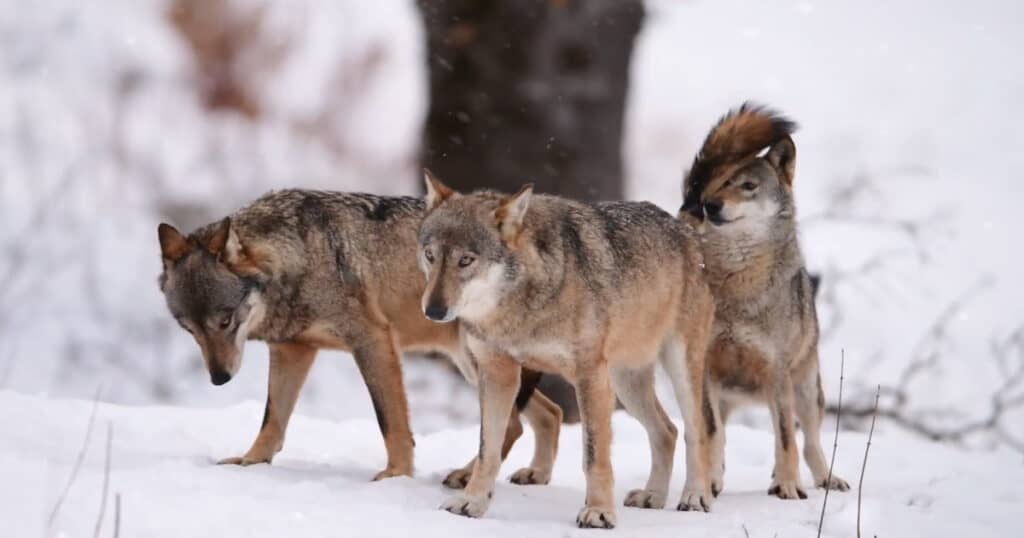
You also have wolves, chamois, golden eagles, and mountains that are proper mountains. A few years ago I summited Corno Grande, at 2,912 metres the highest peak in the Apennines. I have too many favorite hikes to rank them, but that one stays with me. If you prefer water to summits, Lake Campotosto, Abruzzo’s biggest lake, a reservoir at 1,313 metres, is a quiet place for a walk or a picnic.
3) Hill villages that are still lived-in
Abruzzo’s villages are not open-air museums. People live there, argue there, hang their laundry there. Rocca Calascio is one of the highest fortresses in Italy, at 1,460 metres. Santo Stefano di Sessanio is a Medici-era fortified village famous for its lentils. Scanno has its heart-shaped lake and a costume tradition that’s still alive. My personal favorites also include Tagliacozzo and Pescasseroli, and honestly many other small villages I haven’t written about yet.

And then there’s Penne, my own. In 2008 an agent showed me a house there that was literally falling apart. I barely knew the town, but I fell in love with both, bought the house anyway, and rebuilt it exactly as I had imagined it. It became my shelter every time I came back from living abroad. That’s what these villages do to people. Consider yourself warned.
4) The food is simple, and it means it
Abruzzese cooking is shepherd and farmer food: few ingredients, done properly. Arrosticini… thin lamb skewers grilled over coals… are the thing we argue about most. My answer is settled: the best ones are at Da Stefano in Conaprato, a tiny place in the countryside between Penne and Farindola. On a weekend it’s packed with locals, which tells you everything.

Beyond that: pasta alla chitarra, cut on a wooden frame strung like a guitar. Brodetto, the fish stew of the coast. Pecorino cheese from Farindola, probably the only cheese in the world set with pig rennet. And olive oil that still tastes of something… my family has land at Alanno, my father’s village, and we still press our own oil every year. I grew up on that oil. It ruined supermarket bottles for me forever.
5) Montepulciano d’Abruzzo, the wine that smells of home
Our big red is Montepulciano d’Abruzzo… not to be confused with the Tuscan town. I can smell home when I drink it, so don’t ask me to be objective. It’s dark, generous, and it costs a fraction of what a comparable bottle costs in more famous regions.
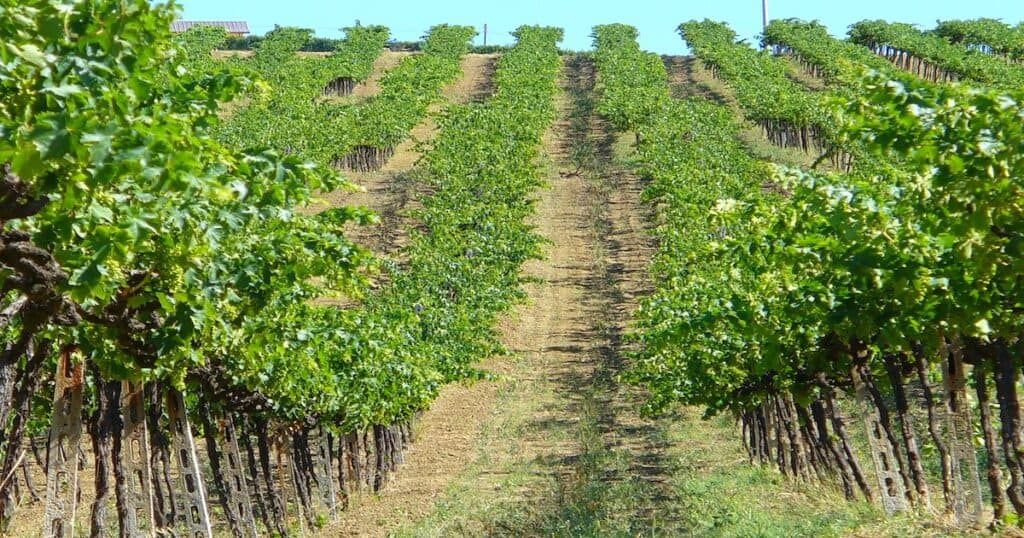
The whites deserve more attention than they get: Pecorino (yes, same name as the cheese), Passerina, and Trebbiano d’Abruzzo. If you drink one thing with seafood on the coast, make it a cold Pecorino. Many wineries are family-run and happy to pour for visitors… ask before you go, this is the countryside, not Napa.
6) Sagra season
A sagra is a village food festival: long tables, plastic plates, one local dish cooked in industrial quantities by volunteers, and a band. There are hundreds of them across Abruzzo every summer. My method is simple… just plan and go. One of my favorites is the sagra in Pretoro, on the Maiella side.
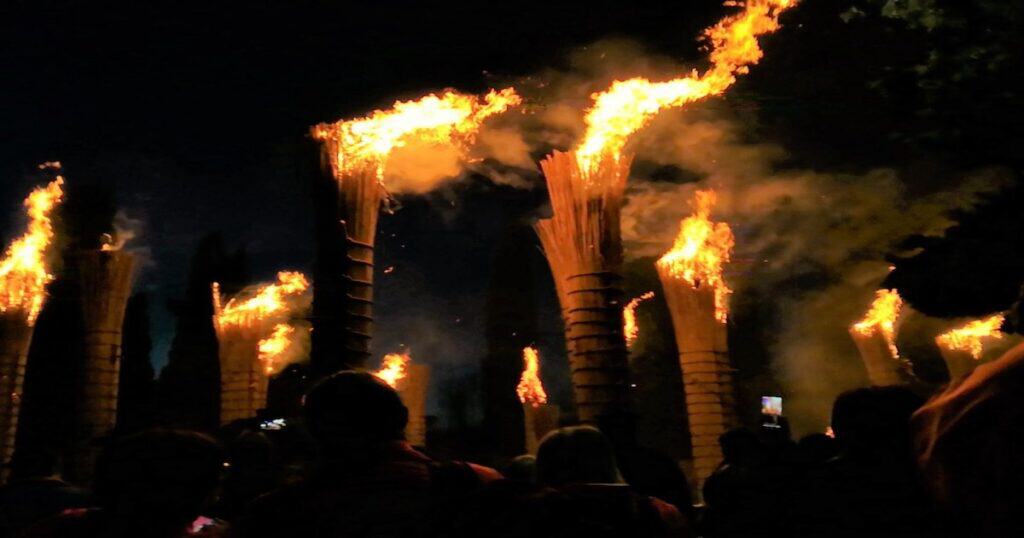
And if you want the strangest festival in Italy, come to Cocullo on May 1st. For the Festa dei Serpari, the statue of San Domenico is carried in procession draped with live snakes, caught in the hills in the weeks before and released afterwards. It’s been happening for centuries and it draws crowds from all over the world. I still find it hard to explain to foreign friends with a straight face.
7) The Trabocchi Coast
South of Pescara, the coast changes character. The trabocchi are old wooden fishing platforms on stilts, reaching into the sea like giant insects, and several have been converted into restaurants where you eat whatever came up that morning, surrounded by water. Book ahead in summer… everyone wants a table on the water, and the platforms are small.

This stretch starts around Ortona and runs south toward Vasto. Near Vasto you also find Punta Aderci, Abruzzo’s first coastal nature reserve and, in my opinion, the most beautiful natural stretch of our whole coastline.
8) Beaches for two different moods
People ask me for “the best beach in Abruzzo” and I always answer with a question: what mood are you in? For fun, give me Pescara: about seven kilometres of sandy beach, lively, commercial, full of stabilimenti… the private beach clubs with their umbrellas and bars. It’s where I grew up. As a teenager I worked as a lifeguard there, and in those years each school had “its” stabilimento; you went where your crowd was. That culture is still alive every summer.

For natural beauty, go south to the Chieti coast, and above all to Punta Aderci near Vasto. Wilder, quieter, no rows of umbrellas. Two coasts in one region, half an hour apart.
9) You won’t be fighting crowds
Here’s my honest position, and you can quote me: Abruzzo has no overrated places, because most of it is still underrated. While the queues wrap around the Uffizi, you can stand alone inside a thousand-year-old fortress here, in August.
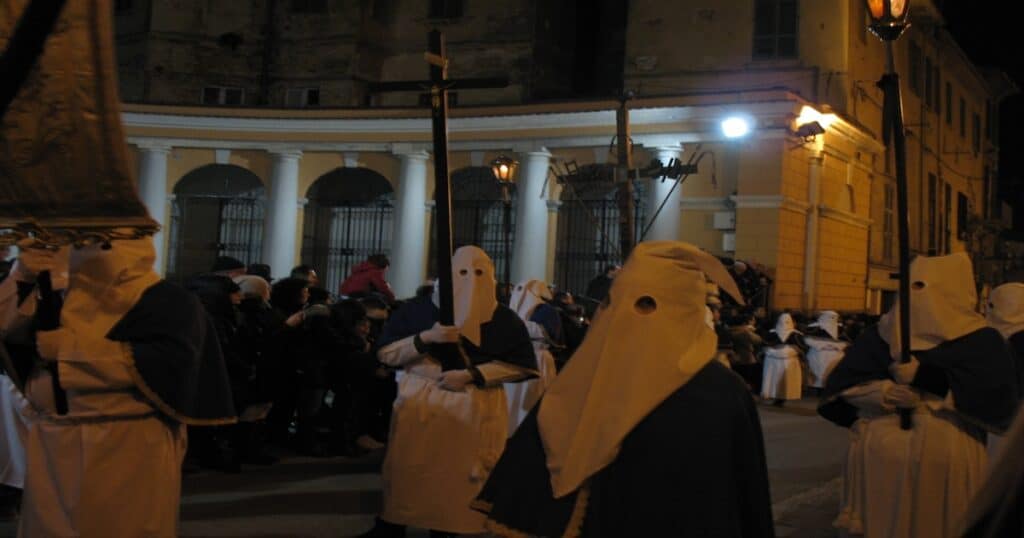
Every non-Italian friend I’ve sent to Abruzzo comes back with the same two reactions: shock at how beautiful it is, and disbelief that nobody talks about it. I’ve stopped being surprised by it. I just enjoy watching their faces when they tell me.
10) Your money goes further
Dinner, a room, a beach umbrella, a bottle of good wine… all of it costs noticeably less than in Tuscany or on the Amalfi Coast. Not because Abruzzo is “cheap”, but because prices here are still set for locals, not for tourists.
It goes beyond the holiday, too. Property here costs a fraction of what it does in Italy’s famous regions, which is why so many readers ask me about it. I keep a town-by-town breakdown in The Real Cost of Abruzzo, and if the idea tempts you, start with my honest guide to houses for sale in Abruzzo.
11) Craft towns that still make things
Some Abruzzo towns are built around a craft, and the workshops are still working. Castelli has painted maiolica ceramics fine enough to sit in the Louvre and the British Museum. Guardiagrele, the “city of stone” d’Annunzio wrote about in Il trionfo della morte, was the home of Nicola da Guardiagrele, one of the great goldsmiths of the Italian 1400s, and copper and gold artisans still work there today. Pescocostanzo has kept its tombolo lace tradition going since the 1400s.

These aren’t souvenir shops. You’re buying from the person who made it, in the town where it’s been made for centuries.
12) History without the queues
The battle of Tagliacozzo in 1268 ended an imperial dynasty; Dante put it in the Inferno. Civitella del Tronto holds one of the largest fortresses in Europe, and it was the last Bourbon stronghold to surrender, on 20 March 1861, three days after Italy was declared a kingdom. It reopens to visitors this July after a long restoration. Atri‘s cathedral holds Abruzzo’s largest Renaissance fresco cycle, painted by Andrea De Litio in the 1400s. Sulmona is the birthplace of the poet Ovid and the home of confetti, the sugared almonds every Italian wedding depends on.
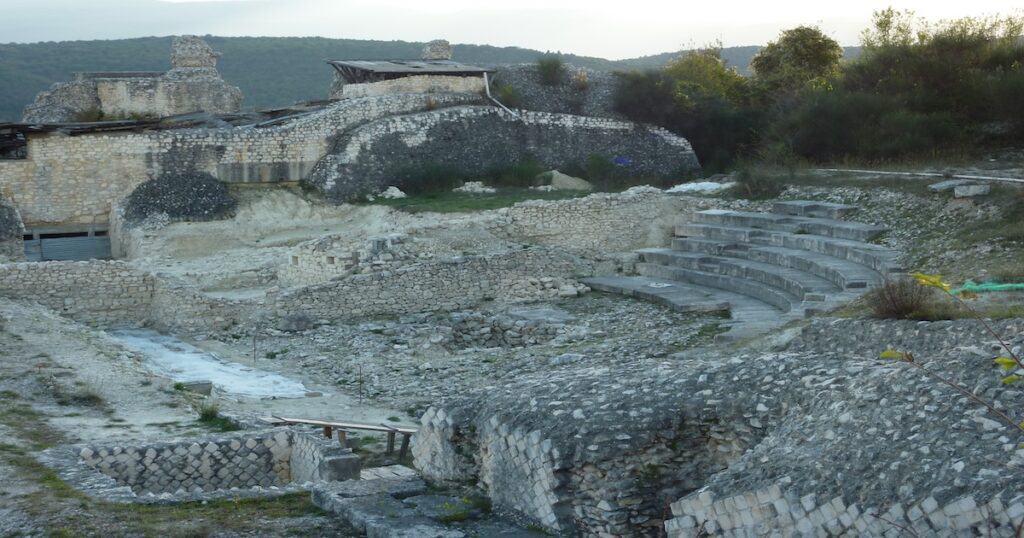
All of that, and you’ll rarely need to book a ticket in advance. History here is something you walk into, not something you queue for.
13) Winter is underrated
Everybody asks about summer. Almost nobody asks about winter, and they’re missing something. Roccaraso, in the Alto Sangro area, is the largest ski district in the Apennines… nearly 150 kilometres of runs by the official count, across Aremogna, Pizzalto and Monte Pratello, on 38 lifts. Not the Alps, and not pretending to be: shorter transfers, smaller crowds, and the sea an hour away for that same-day seafood dinner I keep talking about.

And winter here isn’t only skiing. Snow on the villages, cold air, food that gets even heavier and better. I love to be at home with my fireplace. That’s a reason to visit too, even if it doesn’t photograph as well as a beach.
14) It’s an easy trip from Rome
From Rome you cross into Abruzzo in about an hour by car; Pescara and the coast are roughly two. I do that drive constantly… sometimes just for one lunch or a walk. That’s how close it is: close enough that a Roman family can come for a hike and be home for dinner.
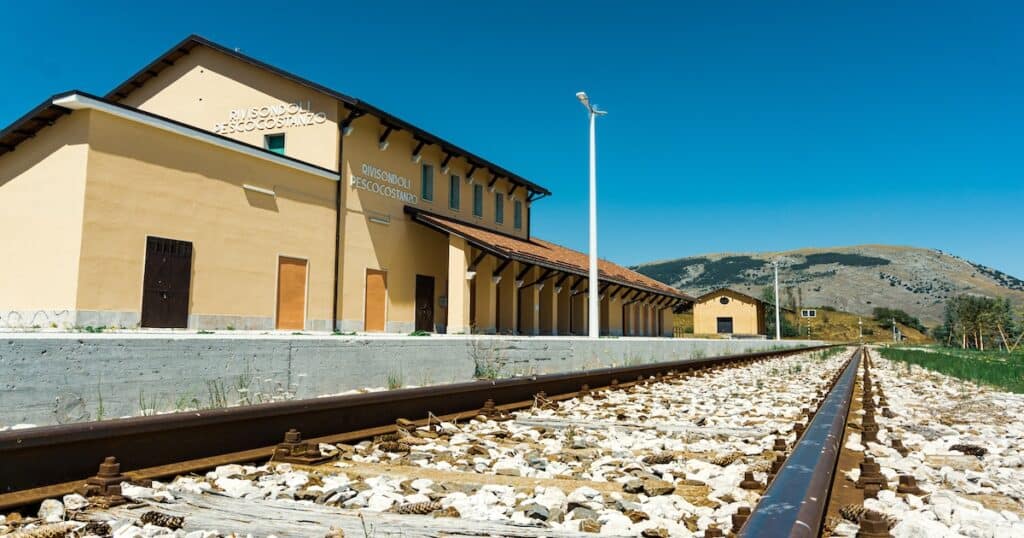
You can also fly straight in: Abruzzo Airport in Pescara has direct low-cost connections with several European cities, including London. One honest warning, and it’s the mistake every first-timer makes: don’t underestimate how big the region is. Basing in one spot and day-tripping everywhere is feasible, but tiring. Pick two bases, mountain and coast, and you’ll see twice as much with half the driving.
15) The people
I saved this one for last because it’s the hardest to prove in writing. Abruzzo’s people are kind in a direct, unperformed way… the kind of place where asking for directions can end with a coffee. I won’t invent a story about a nonna and homemade cookies; you’ll collect your own within a day or two.

What I can tell you is my own side of it: over the years I’ve personally helped foreigners plan their visits, buy houses, move here, even trace their Abruzzese ancestors. I love when I see people who like my region. That’s the whole reason this site exists, and it’s what my Work with me page is for.
Who should probably not come
I’d rather lose you now than disappoint you later. Skip Abruzzo if:
- You want five-star resorts and beach clubs with DJs. Our luxury is a good table and a view.
- You travel without a car and expect trains and buses to take you everywhere. Public transport exists, but the best of Abruzzo is in places it doesn’t reach well.
- You measure a trip in famous monuments per day. We have history everywhere, but no Colosseum, and English isn’t spoken everywhere either.
If none of that scared you, you’re exactly the kind of traveler this region rewards.
Questions I get about visiting Abruzzo
Is Abruzzo worth visiting?
Yes, if you want the Italy that Italians keep for themselves: mountains and sea half an hour apart, honest food and wine, lived-in villages and no crowds. It’s not the right choice for a resort holiday or a car-free trip. For the full picture, start with my complete Abruzzo travel guide.
How many days do you need in Abruzzo?
A long weekend shows you one face of the region; a week lets you do mountains, villages and coast properly. The region is bigger than people expect, so plan around two bases rather than one. I’ve mapped out 7, 10 and 14-day itineraries here.
When is the best time to visit Abruzzo?
Spring is my honest answer: green mountains, flowers, mild days, empty trails. Summer brings the sagra season and beach life, winter brings snow and skiing. I break the whole year down in my seasonal guide.
Do you need a car in Abruzzo?
For the mountains and the villages, yes, realistically. You can manage Pescara and the main coastal towns by train, but the places that make Abruzzo special mostly sit where buses are rare. Rent a car and the whole region opens up.
Is Abruzzo expensive?
No. Eating, sleeping and living here cost clearly less than in Italy’s famous regions, because prices are still set for locals. If you’re curious about what things really cost, town by town, I keep the numbers updated in The Real Cost of Abruzzo.
So… is Abruzzo calling you?
Fifteen reasons, zero invented stories. I left at sixteen and spent years living away, in Italy and abroad, and still, every drive back ends with that countdown at the border. If a region can do that to someone after fifty years, it can do something to you in a week.
Your next step is simple: decide how many days you have, and let me plan the route with you. Start here: how to plan the perfect Abruzzo itinerary, with 7, 10 and 14-day options. Ci vediamo in Abruzzo… see you in Abruzzo.
